
 English
 العربية
 中文语言
中文语言
 русский язык
 Le français
 Española
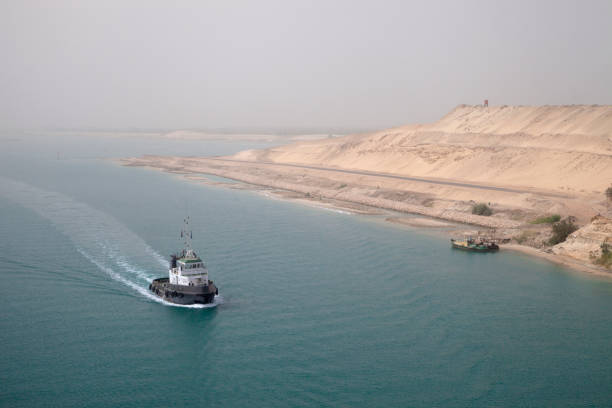
Contemporary economic systems undergo rapid transformations. As a result, countries have been compelled to adopt innovative legislative frameworks capable of keeping pace with the demands of global investment and enhancing competitive advantage. In this context, private economic zones (PEZs) have emerged as one of the most important legislative tools that countries use to achieve sustainable development. By providing a flexible legal environment that attracts capital, PEZs strike a balance between considerations of national sovereignty and the requirements of economic openness.
The General Authority for the Suez Canal Economic Zone (GASCEZ) is a practical embodiment of this trend in Egyptian legislation. The Suez Canal Economic Zone (SCEZ) was established under Law 83 of 2002 on PEZs and amendments thereto, to serve as a comprehensive legal model with regulatory autonomy and administrative and financial independence, enabling it to fulfill its role as a global investment gateway.
Within the legal framework, the lawmakers sought to establish a comprehensive legislative system under streamlined procedures, centralizing the point of contact for investors, and providing incentives and legal safeguards that enhance the investment climate. This, in turn, contributes to raising the country’s economic competitiveness and attracting foreign direct investment.
Thus, the SCEZ raises several fundamental legal questions, the most notable of which are: The effectiveness of this special legislative framework in achieving its economic objectives; the extent of the autonomy granted to the GASCEZ in relation to general regulations; and the extent to which this model aligns with international trends in the regulation of PEZs.
This article aims to analyze the legal framework governing the SCEZ and to highlight its role as a legislative mechanism for enhancing economic competitiveness, with an analytical study of the provisions of Law 83 of 2002 as amended, in light of practical applications and the challenges posed by the contemporary investment environment.
The SCEZ is a PEZ established in accordance with the provisions of Law 83 of 2002, as amended. It enjoys legal personality and administrative and financial independence, and is administered by the GASCEZ. It aims to regulate economic activity within its jurisdiction under a distinct legal framework designed to attract investment.
Benefits of Investment in the SCEZ:
1. Legislative Flexibility and Regulatory Support for Investors: Projects established within the SCEZ benefit from a flexible special legal framework derived from Law 83 of 2002 as amended.
2. Financial and Administrative Independence: The GASCEZ enjoys administrative and financial independence, which grants it the power to make decisions without having to go through the usual government bureaucracy, thereby enhancing the efficiency of investment management.
3. The fact that the SCEZ is subject to a single regulatory authority enshrines the principle of a single point of contact, thereby ensuring the prompt issuance of licenses, reducing procedural complexities, and streamlining the incorporation process and post-incorporation services.
4. Foreigners are permitted to have a 100% shareholding without restrictions, in line with international standards for attracting foreign direct investment.
5. Free repatriation of profits and capital with no restrictions.
6. The GASCEZ’s Board of Directors may establish additional incentives and streamlined procedures for strategic projects, in accordance with its legal authority.
7. Effective dispute resolution mechanisms, including recourse to domestic and international arbitration, thereby enhancing legal certainty for investments.
8. A flexible contractual system (right of use) that allows for the use of land without transferring ownership, along with flexible payment plans, thereby reducing the financial burden on investors.
9. Providing infrastructure throughout the economic zone, equipped with the necessary facilities.
10. Customs and tax exemptions, including 0% VAT on imports necessary for production, and a deduction of up to 50% of net profits (up to a maximum of 80% of capital for a period of 7 years), along with access to Egypt’s free trade agreements.
Regulations For Establishing Projects in the SCEZ:
- No project, regardless of its legal form, may be established within the PEZ without the approval of the Board of Directors. The Board of Directors establishes the requirements for the practice of professions and trades, as well as the conditions that must be met for the issuance, suspension, or revocation of licenses for projects and activities.
- An application for project approval must be submitted, including the information specified by the Board of Directors, which includes the following:
1. The founders or partners, as applicable, and their nationalities.
2. The purpose of the project, the investment costs, the legal structure of the project, and the amount of capital.
3. Sources of funding, and domestic or foreign requirements.
4. The required space, the number of workers, as well as their types and nationalities.
5. The proportion of the product intended for export, and the environmental impacts.
Establishment of Legal Entities in the PEZs:
Projects established in the PEZ must adopt one of the following legal forms:
Sole Proprietorship – One-person Company (OPC), Branches of Foreign Companies – Branches of Local Companies – General Partnership – Limited Partnership – Joint-Stock Company – Limited Liability Company – Limited Partnership with Shares.
The GASCEZ’s Board of Directors issues standard forms for articles of incorporation for companies; these forms may not contain any provisions that violate public policy or the law. Furthermore, no approval of the project or of the land on which the project is to be located is required for the incorporation of companies.
Legal Regulations For Legal Entities in the SCEZ:
- 1. Sole Proprietorship:
A sole proprietorship is a business owned by a single individual, whether Egyptian or foreign. The owner is responsible for establishing and managing the business and is personally liable for all of the business's obligations. The business does not have a legal personality separate from its owner, and the owner must have legal capacity.
For sole proprietorships, the minimum capital requirement is EGP 100,000, except for service activities conducted in industrial zones and urban cities, where the minimum capital requirement is EGP 10,000.
The owner of a sole proprietorship may not be a legal entity.
- 2. General Partnership:
A general partnership is a business entity formed by two or more individuals to operate under a single trade name. The partners are jointly and severally liable. The business name consists of the names of the partners or one of them, followed by the phrase “and Partners” or an equivalent expression, and the partners must possess legal capacity.
The minimum capital requirement for general partnerships is EGP 300,000, except for service activities conducted in industrial zones and urban cities, where the minimum capital requirement is EGP 30,000.
Foreigners may have 100% shareholding, except for activities restricted to Egyptians.
Joint and several liability of partners: All partners are jointly and severally liable for the company’s obligations with their personal assets. The company is managed by one or all of the partners or by an appointed manager, and they are jointly and severally liable for the company’s debts.
- 3. Limited Partnership:
A limited partnership is a company composed of general partners and limited partners; the company’s name may not include the name of a limited partner.
The minimum capital requirement for limited partnerships is EGP 300,000, except for service activities conducted in industrial zones and urban cities, where the minimum capital requirement is EGP 30,000.
Foreigners may have a 100% shareholding, except for activities restricted to Egyptians.
Liability of Partners: A general partner is fully liable for the company’s debts and has the right to manage the business, while a limited partner is liable only to the extent of his or her capital contribution and has no management rights.
- 4. Limited Liability Companies (LLCs):
An LLC is a company consisting of a minimum of two partners—whether natural or legal persons—and a maximum of fifty partners. Natural person partners must have legal capacity. If the number of partners exceeds ten, a supervisory board must be formed consisting of at least three members who are not managers.
Company Name: The company may bear the name of one of the partners, a trade name, or a name derived from its purpose.
Capital: The minimum share capital is determined by the partners in the articles of association.
Purpose of the Company:
- If the company's purpose (labor services) is within Egypt, abroad, or both, the paid-in capital must be at least EGP 100,000.
- In the case of overseas operations only, the percentage of Egyptian shareholding must not be less than 51%; in the case of domestic or joint operations, the percentage of Egyptian participation must be 100%.
Partners’ shares: Partners may contribute in-kind assets, provided that the cash contribution is not less than 25% of the company’s capital. In-kind shares shall be valued by a qualified expert
Foreigners may have a 100% shareholding, except for activities restricted to Egyptians or those requiring a specific percentage of Egyptian shareholding.
Company management: At least one director must be an Egyptian national.
- 5. Joint stock Companies (JSCs):
A JSC is a company with a minimum of three shareholders, whether natural or legal persons. There is no maximum number of shareholders, and natural person shareholders must have legal capacity.
The company’s capital: The minimum capital requirement is EGP 250,000, 10% of which must be paid upon incorporation, with the 25% to be paid within a period not exceeding three months from the date of incorporation. The authorized capital may be up to ten times the issued capital.
Foreigners may have a 100% shareholding, except for activities restricted to Egyptians or those requiring a specific percentage of Egyptian shareholding.
The minimum number of members of the board of directors is three; some or all of them may be non-shareholders, and all of them may be foreign nationals.
The company’s articles of association may provide for the appointment of more than one representative of a legal entity to the board of directors. Each representative shall be counted toward the composition of the board and the quorum for meetings and voting.
The articles of association may provide for the issuance of shares to employees, provided that such shares do not exceed 25% of the total shares and are fully paid up.
If shares are offered for public subscription, the issued capital must not be less than one million Egyptian pounds.
Minors may contribute funds through a legal guardian; however, if the funds are the minor’s own, permission must be obtained from the competent court.
For in-kind shares, the shares shall be valued by a committee of the GASCEZ and shall not exceed 75% of the total capital.
Purpose of the Company:
- If the company’s purpose is to engage in foreign exchange (currency exchange), its paid-in capital must be no less than EGP 50 million, and Egyptian shareholding must be 100%, with prior approval from the Central Bank of Egypt (CBE) required before incorporation.
- If the company’s purpose is to engage in insurance activities, its issued capital must not be less than EGP 30 million, and at least half of it must be paid up at the time of incorporation, subject to prior approval by the Financial Regulatory Authority (FRA).
- If the company’s purpose is to provide labor services (in and/or outside Egypt), the paid-in capital must not be less than EGP 100,000. In the case of employment outside Egypt only, Egyptian shareholding must not be less than 51%; in the case of domestic or joint employment, Egyptian shareholding must be 100%.
- If the company’s purpose is to publish a newspaper or newsletter, it must be organized as a JSC, with 100% Egyptian shareholding. The shareholding of any individual and their family members up to the second degree may not exceed 10% of the capital. The paid-in capital at incorporation must not be less than 10% of the issued capital, and the minimum issued capital before issuance shall be as follows:
- EGP 1,000,000 for daily newspapers.
- EGP 250,000 for weekly newspapers.
- EGP 100,000 for monthly newspapers (with a minimum of EGP 250,000)
- 6. Limited Partnership with Shares:
A limited partnership with shares is a company consisting of at least two partners, whether natural or legal persons, provided that the natural persons have legal capacity. The company must have a trade name derived from its purpose, which may include the name of a general partner. There must be at least one general partner, whose name must be included in the company’s address, and who shall have management rights.
Company Capital: The minimum issued capital is EGP 200,000. Ten percent must be paid upon incorporation, with the remainder paid up to 25% within a period not exceeding three months from the date of incorporation. The authorized capital may be up to ten times the issued capital.
The minimum amount of cash shares is one-quarter of the issued capital. The maximum in-kind shares are three-quarters of the issued capital.
If shares are offered for public subscription, the issued capital must not be less than one million Egyptian pounds.
For in-kind shares, the shares shall be valued by a committee of the GASCEZ.
Foreigners may have a 100% shareholding, except for activities restricted to Egyptians or those requiring a specific percentage of Egyptian shareholding.
The minimum number of members of the Supervisory Board is three; they may be non-managing partners or other partners.
Purpose of the Company:
- If the company’s purpose is to employ workers (within Egypt, outside Egypt, or both), the paid-in capital must not be less than one hundred thousand Egyptian pounds. In the case of employment outside Egypt only, Egyptian shareholding must be at least 51%; in the case of domestic or joint employment, Egyptian shareholding must be 100%.
- If the company’s purpose is to publish a newspaper or newsletter, the Egyptian shareholding must be 100%. The shareholding of any individual and their family members up to the second degree may not exceed 10% of the capital. The paid-in capital at incorporation must not be less than 10% of the issued capital, and the minimum issued capital before issuance shall be as follows:
- EGP 1,000,000 for daily newspapers.
- EGP 250,000 for weekly newspapers.
- EGP 100,000 for monthly newspapers (with a minimum of EGP 250,000)
Basic Requirements for Establishing Companies in the SCEZ (JSCs, Limited Partnerships, LLCs, and OPCs):
1. A letter to the Investor Services Department, requesting the initiation of incorporation procedures.
2. Copies of powers of attorney issued by all founders, partners, or owners of the company (as applicable), which must include an explicit provision authorizing the incorporation of the company, in accordance with the form approved by the GASCEZ.
3. Security clearance form in cases where there are foreign partners, or where the company owner or manager is a foreign national.
4. Certificate of non-confusion regarding the company’s trade name.
5. Copies of national ID cards of Egyptian nationals or valid passports for non-Egyptian nationals who are founders, partners, or owners of the company.
6. A bank certificate confirming the deposit of at least 10% of the issued capital (for JSCs and limited partnerships with shares); when establishing an OPC, a bank certificate confirming the deposit of 100% of the issued capital is required.
7. A copy of the Bar Association ID card of the attorney signing the Articles of Association.
8. If a JSC or a limited partnership with shares includes shares in kind, the original report issued by the committee formed by the GASCEZ to evaluate such shares must be submitted.
9. In the case of in-kind shares in LLCs, a report from a specialized expert, tailored to the nature of the share, shall satisfy the requirement.
10. The lease agreement for the company’s headquarters must be located within the SCEZ.
11. Approval of the appointment of an auditor (who must be registered with the GASCEZ).
Basic Requirements for Establishing Partnerships in the SCEZ (General Partnerships – Limited Partnerships):
- A letter to the Investor Services Department, requesting the initiation of incorporation procedures.
- Copies of the powers of attorney issued by all partners must include an explicit provision authorizing the incorporation of companies in accordance with the form approved by the GASCEZ.
- Security Inquiry Form for cases involving foreign partners.
- Certificate of Non-Confusion regarding the company's trade name.
- Copies of national ID cards of Egyptians or valid passports of non-Egyptians.
- A copy of the Bar Association ID card of the attorney signing the articles of association (must be at least a provisional license and currently valid).
- If there are in-kind shares, it is sufficient to prove their value in the articles of association, subject to the partners’ liability.
- The lease for the company's headquarters must be located within the SCEZ.
Basic Requirements for Establishing Sole Proprietorship in the SCEZ:
- A letter to the Investor Services Department, requesting the initiation of incorporation procedures.
- A power of attorney issued by the owner of the establishment, in the event of incorporation through an attorney, must include an explicit provision authorizing the incorporation of companies in accordance with the form approved by the GASCEZ, along with the submission of a security clearance form if the owner is a foreign national.
- Lease agreement of the headquarters, which must be located within the SCEZ.
- A copy of the business owner’s national ID card (Egyptians) or a valid passport (non-Egyptians), as well as a copy of the attorneys' ID card (if applicable).
- The business owner must be a natural person and have legal capacity.
After the company is incorporated (depending on its legal structure), a tax ID card is issued, and the following documents must be submitted:
1. A letter on company letterhead, to the Investor Services Department, requesting the issuance of a tax card.
2. A recent extract of the company’s commercial registry.
The Regulatory Framework and the GASCEZ’s Jurisdiction in the SCEZ:
Within its jurisdiction, the GASCEZ has the powers of the administrative body responsible for enforcing Companies Law 159 of 1981 at all stages of a company’s existence. It has the authority to issue business operation licenses and trade name certificates, including non-confusion certificates. Its Board of Directors also possesses the powers of the competent government authorities to establish rules and conduct supervision and inspection in a manner appropriate to the nature of the SCEZ.
The GASCEZ may also establish or authorize a third party to establish a master development company, in the form of a JSC, for the SCEZ development. The Board of Directors may also delegate to this company the implementation, management, and maintenance of infrastructure and ports, as well as the promotion of the SCEZ.
Imports from economic zones into Egypt are subject to general regulations established by the Board of Directors following approval by the Minister of Trade and Industry and endorsement by the Council of Ministers. These regulations include the identification of goods and the conditions for import, and provide that products from the SCEZ shall be treated as domestic products.
Goods imported from within Egypt to PEZs are treated as exports and are subject to 0% VAT in accordance with Value-Added Tax Law 67 of 2016.
Companies and establishments may acquire land and real estate within the PEZ under an annual usufruct system, by decision of the Board of Directors, for a term not exceeding 50 years, which is renewable.
Tax benefits and incentives for projects in the SCEZ:
Projects within the SCEZ benefit from an incentive-based customs and tax system, whereby imports of materials and equipment necessary for construction and operation are exempt from customs duties. Customs duties are applied only to foreign components when the final product enters the local market, and re-export is permitted without restrictions.
Transactions within the SCEZ are subject to a 0% VAT on all imports from within or outside the country, including production inputs, raw materials, and spare parts, while a 14% VAT applies to products sold in the domestic market.
With regard to income tax, investment projects are eligible for an investment incentive in the form of a deduction of up to 50% of taxable net profits, not to exceed 80% of paid-in capital, for a period not exceeding seven years from the date of commencement of operations.
Non-taxable Benefits and Incentives for Projects within the SCEZ:
By a decision of the Council of Ministers, based on a proposal from the GASCEZ’s Board of Directors, labor-intensive projects or those operating in the fields of local content, logistics, energy, agriculture, and transportation may be granted non-tax incentives, including, in particular:
- Discounted rates or payment plans for electricity bills.
- Payment of the cost of utilities connection to the plot of the project, or a portion thereof, if the investor is responsible for such costs.
- The GASCEZ pays the employee’s and employer’s share of social security contributions, or a portion thereof, for a specified period.
- The GASCEZ may cover part of the costs of technical training for Egyptian workers.
- Allocation of a suitable plot to conduct business for a nominal usage fee.
- By a decision of the Council of Ministers, and based on a proposal from the Board of Directors, companies established in the SCEZ may be granted the right to undertake projects that contribute to public utilities, infrastructure, energy, roads, or ports.
Non-tax Incentives and Benefits are Granted In Accordance with Specific Regulations, the Most Important of Which Are:
1. Incentives and benefits are granted fairly and without discrimination among similar projects, and in a manner that does not constitute support that violates international obligations.
2. Incentives and benefits are granted only after actual operations have commenced and the schedule and operational requirements have been met. Incentives and benefits shall not be combined with the investment incentive provided for under the Investment Law.
- Incentives and benefits are granted for three years and may be renewed only once by a decision of the Board of Directors, following an assessment of the economic impact and the justification for continuing the program.
- These incentives and benefits may be revoked upon approval by the Board of Directors in the event that the project fails, its timeline is not met, or its ownership structure is changed without approval; or if domestic sales exceed 85% of the project’s output, provided that the local content of the product exceeds 40% of the cost.
- By a decision of the Council of Ministers, based on a proposal from the Board of Directors, more than one incentive or non-tax benefit may be combined. However, such a decision is based on a comprehensive financial and economic study demonstrating the project’s feasibility, the rationale for the incentive, its economic impact, and its funding sources. The Board of Directors is responsible for developing a procedural manual to regulate applications for the incentives, with the SCEZ bearing all associated costs without any additional costs on the public treasury.
In conclusion, it is evident that the legal framework governing the SCEZ Zone is not merely a set of regulatory rules. Rather, it constitutes a comprehensive legislative system designed to strike a balance between attracting investment and enhancing the competitiveness of the business environment, on the one hand, and ensuring legal compliance and protecting rights, on the other. This balance is achieved through the regulatory flexibility, investment incentives, and effective mechanisms to streamline procedures and accelerate the investment cycle.
In this context, the professional role of Sadany & Partners Law Firm is becoming increasingly significant as a strategic legal partner for investors. We play a pivotal role in advising investors on the optimal legal framework, drafting sound legal structures, and efficiently managing incorporation and licensing procedures. We also provide precise legal advice that ensures full compliance with relevant legislation, thereby helping to strengthen investors’ legal positions, maximize the benefits of available incentives, and minimize potential risks, ultimately leading to stable, secure, and sustainable investment within the SCEZ.
RELATED POSTS

- /
- 2026-06-25


- /
- 2026-06-23