 English
 العربية
 中文语言
中文语言
 русский язык
 Le français
 Española

On June 12, 2026, Russia celebrated its national day, the country's national holiday, commemorating the adoption of the Declaration of State Sovereignty on June 12, 1990 and the birth of the modern Russian Federation. This Newsletter is issued on the occasion of this event to provide the important highlights of recent Egyptian investment legislation as well as build bridges across Asia, Russia and the Middle East together with our partner the Asian Exporters’ Chamber of Commerce and Industry (AECCI).
Why to Establish a Company in Egypt?
Egypt represents one of the most promising investment destinations in the Middle East and North Africa (MENA) region. With its strategic geographic position bridging Africa, Asia, and Europe, Egypt serves as a natural hub for trade and investment — offering direct access to a consumer market exceeding 1.4 billion people through numerous free trade agreements, including those with COMESA, GAFTA, the EU, and the UK.
Establishing a company in Egypt offers strategic access to a market of over 110 million people and serves as a gateway to the broader Middle East and Africa. Entrepreneurs and foreign investors benefit from 100% foreign ownership options, highly competitive labor costs, and significant tax incentives in designated zones. There is a huge potential for companies in Egypt which seek to expand beyond the developed, mature markets of the northern hemisphere. Egypt`s enormous domestic market, strong GDP growth, strategic geographical position makes it attractive for foreign investment. Recently, the ARE had made remarkable economic progress and Cairo with its vibrant environment and rapidly growing economy undoubtedly constitutes a hub for businesses across the Middle East and North Africa. There are investment opportunities in a variety of sectors, attracting interest from around the world.
An investor wishing to make an investment in Egypt shall establish a legal entity with legal controls and regulations. Under the Egyptian law, a company is a distinct legal entity formed by contract for commercial purposes, separating owners from the business, with liability typically limited to capital contributions (e.g., shares or quotas) for types like LLCs and JSCs, under the primary regulation of Law No. 159 of 1981, which defines various structures including Joint Stock Companies, Limited Liability Companies (LLCs), and newer One-Person Companies (OPCs).
Our law firm will verify and secure necessary local requirements, such as physical or virtual registered office addresses, independent auditor mandates, and security clearances for foreign shareholders. We will ensure compliance with evolving corporate regulations and streamline navigation through local bureaucratic processes. It will prevent costly administrative delays by expertly handling the necessary legal, financial, and security procedures under Egyptian law.
Roadmap with a timeline for all the processes of incorporating a company in Egypt.
First: The client shall choose the type of the company, and below there are suggested three types of companies in Egypt and the differences are as follows:
Type of company
Joint Stock company
Limited Liability company
One-person limited liability company
Shareholders
The minimum number of partners is 3
The minimum number of partners is 2
The company is owned by One Person or company
Capital
The minimum capital is EGP 250000 to be deposited on three payments, 10% is to be paid at the time of incorporation, to be increased to 25% within three months, and the remaining amount of the nominal value of the shares is to be paid up within five years.
There is no minimum capital for this type of company, and even the suggested capital should not be deposited before the incorporation, however, in certain activities the company should deposit the capital.
The minimum capital for this type of company is EGP 1000, and it should be deposited before the incorporation of the company.
Managers
Board of Directors to manage the company
The company could be owned by one manager, and he could be Foreigner
The company could be owned by one manager, and he could be Foreigner
Second: After choosing the type of company that fits the client’s needs, preparation of the required documents shall start.
A- There are several documents that are kindly requested to be prepared by a client:
1. Notarized powers of attorney to be legalized from the Egyptian consulate in your jurisdiction if you are outside Egypt and you can make it here in Egypt but you will need a translator with you.
2. Copies of valid ID or passports of the shareholder. However, if the shareholder is a juristic person, then, the following documents are needed for the juristic shareholder as follows:
A- The article of association of the juristic shareholder.
B- commercial register of the juristic shareholder.
C- If the owners of the juristic shareholder are juristic, then, we will need the article of association and the commercial register of those owners.
D- Power of attorney from the legal representative of the juristic person.
E- All the above-mentioned documents should be legalized by the Egyptian consulate.
3. Deposit the capital of the company. (for OPC and Joint-stock company).
2- There are other documents that will be prepared from our side as follows:
1. An official original certificate obtained from the Register of Accountants and Auditors to review and approve the balance sheet of the company. In case the original was previously furnished to GAFI, an acceptance declaration shall be submitted.
2. A certificate of non-confusion of company`s name approved by the Commercial Register.
3. A copy of the Bar Association Card of the lawyer who signs the articles of association.
4. A security check on foreign founders and managers.
5. The name and address of the company’s legal consultant (who must be a lawyer at least admitted before the Court of Appeal).
6. In the event of sharing in-kind shares upon incorporation, the report provided by the experts specialized in the professions stated by the law, must be submitted.
Third: Company Registration Timeline:
Here are the registration steps and the expected timeline to complete each step, however, it is worth mentioning that the below timeline will be only applied after A – receiving all required documents and B- depositing the company’s capital, if applicable.
Steps
Timeline
1- Legalizing the documents issued outside Egypt including the juristic shareholder documents, if any, and POAs.
2 working days
2- Obtaining a non-confusion certificate for the company’s name
3 working days
3- Signing the company’s Article of Association with GAFI lawyer
2 working days (based on the company’s activity)
4- Signing the company’s Article of Association with a Notary public lawyer
2 working days (based on the company’s activity)
5- Receiving the corporate documents
It usually takes 3 to 5 working days to obtain the corporate documents including (the Commercial Register – Article of association – the Incorporation certificate) starting from the time of signing the company’s article of association with GAFI, however, if we start the incorporation process under the VIP service then we can obtain the documents within one working days.
6- Obtaining the Tax Card
Two weeks approximately after receiving the company’s documents.
Undoubtedly, we see that Egypt can be considered as a key strategic partner for the businesses due to its significant location connecting Europe, the Middle East, and Africa. The growth potential of the country and attractive investment incentives (golden licences, tax exemptions, and export subsidies offered by the Egyptian government) boost investments.
Summary from the corporate department: recently, most frequently incorporating types of companies are the following ones: LLC and one-person companies.
Also, a client may wish to analyze the market and the production processes before starting investment in Egypt. The Egyptian legislator authorized such works and granted foreign companies the right to open a representative office in the State.
The purpose of incorporation shall be limited to analyzing the market and the possibility of production without practicing any commercial activity for a specific period. To ensure that this requirement is met and that the representative office companies with the provisions of the law and its Executive Regulations, the legislator granted the competent administrative authority the right to carry out the inspection on the representative offices and access their accounting books, and order such offices to notify the competent administrative authority of all the work carried out and studied, as well as the outcome of such works and information about the staff, their names, jobs, nationalities, and salaries.
The Executive Regulations provided for the necessity of registering representative offices in a register prepared for this by the competent administrative authority. Registration applications shall be submitted to representative offices, including the name of the foreign company, its nationality, purpose, capital, head office, and branches - if any - in Egypt. These also include the type of office to open in Egypt, its specific purpose, and its permanent or temporary address, which shall be attached to the application.
Why Arbitration — Not Courts. A Practical Guide for International Commercial Business Community
Cairo is rapidly emerging as a central hub for international arbitration.
The Arab Republic of Egypt is one of the first countries which acceded to the New York Convention on March 9, 1959 without any reservations. And in 1979, the first regional arbitration center was created in the Arab World: the Cairo Regional Center for International Commercial Arbitration (CRCICA). We should mention that in CRCICA the fee for submission of request for arbitration is moderate that puts the institution in Egypt in a competitive position as “fixed registration fee amounting to US $ 500 to be paid by the claimant upon filing the notice of arbitration and the respondent upon filing a counterclaim”. This applies if the sum in dispute is under $1,000,000 or $1,000 filing fee is applicable if the claim is $1,000,000 or more.
Recently Egypt has acquired a status as a regional Alternative Dispute Resolution (ADR) hub, hosting major events like the ICC Egyptian Arbitration Day and proceedings at CRCICA. This becomes particularly relevant for the Russian parties because traditional Western venues (like London or Paris) impose heavy sanctions, causing administrative and legal barriers. By utilizing Egypt—specifically through the Cairo-based CRCICA—Russian companies get access to neutral ground to resolve cross-border disputes without violating sanctions or freezing assets.
At a time of geopolitical turbulence and growing demand for independable and neutral dispute resolution frameworks, CRCICA represents a stable and forward-looking arbitration hub. Recently the Russian Ministry of Justice officially granted the Cairo Regional Centre for International Commercial Arbitration (CRCICA) the prestigious status of "Permanent Arbitration Institution" (PAI). This recognition assures Russian companies and courts that arbitration seated in Cairo meets the highest global standards of impartiality.
Egypt is widely considered a highly strategic arbitration hub for the Russian parties navigating international sanctions and reflects country’s growing stature in the global arbitration community.
Though Egypt has adopted an increasingly pro-arbitration stance in recent years there are some limitations still applicable as not all disputes can go to arbitration under the Egyptian legislation. Under the Egyptian Arbitration Law No. 27 of 1994, arbitration is only permitted in matters where parties are legally free to compromise or settle. The scope of arbitrability is governed by Article 11 of the above-mentioned Law which limits arbitration to disputes where settlement by agreement is legally permissible. In practice, this excludes matters of personal status — divorce, parentage, and guardianship — as well as criminal liability, both of which are reserved exclusively for state courts as a matter of public order. Bankruptcy and insolvency proceedings are similarly non-arbitrable, given that they engage the collective rights of creditors and require judicial supervision. Tax and customs disputes involving the state have historically occupied contested ground, though Egyptian courts have generally resisted arbitration in this area on public policy grounds.
Additional oversight is provided by the Higher Commission for Arbitration and International Disputes under Prime Ministerial Decree no. 1062 of 2019, which reviews arbitration clauses in agreements with foreign investors. It is an inter-ministerial body chaired by the Egyptian Prime Minister to manage and oversee state involvement in international arbitration.
The Challenge with Courts
When a cross-border dispute arises, the instinct is to look at the governing law clause and brace for litigation. But state courts present a structural problem that goes beyond inconvenience: a judgment from one country is often unenforceable in another. Your counterparty’s assets may sit in a jurisdiction that has no bilateral enforcement treaty with yours. You win in court — and collect nothing. Arbitration was built to solve this problem among others.
What Is Arbitration?
Arbitration is a private, contractual mechanism for resolving disputes outside of state courts. Parties agree — typically at the time of contracting — to submit any dispute to one or more neutral arbitrators. The arbitrator’s decision, called an award, is final and legally binding. This is not mediation: there is no need for both sides to agree on an outcome. The arbitrator decides, and the losing party must comply.
Three features define it:
• Consensual: Both parties agree to arbitrate through a clause in their contract.
• Binding: The award carries the same legal force as a court judgment.
• Private: Proceedings and the award are confidential. No public record is created.
What the Data Shows
The Queen Mary University of London (QMUL) International Arbitration Survey is the most authoritative global study on dispute resolution practice, drawing on over 1,200 responses. Its 2021 findings:
• 90% of respondents preferred international arbitration as their primary method for resolving cross-border disputes.
• 59% preferred arbitration combined with ADR (mediation or industry-specific methods) — recognizing that a negotiated settlement is often faster and cheaper than a full hearing.
• Awards are enforceable in 172 countries under the 1958 New York Convention — the most successful international commercial treaty in history.
Why It Works for Business.
Enforceability Across Borders
A court judgment is enforceable where it was issued — and often nowhere else. An arbitral award travels. Under the New York Convention, it is enforceable in 172 states, including across the GCC, Asia, Africa, and beyond. If your counterparty’s assets are abroad, only an arbitral award can realistically reach them.
Specialist Expertise
In state courts, you receive the judge you are assigned. In arbitration, you select arbitrators with expertise in your specific sector — construction, energy, finance, or trade. A dispute over a FIDIC-based engineering contract can be heard by engineers who have spent their careers in the industry, not generalist judges interpreting technical documents for the first time.
Confidentiality
Court proceedings are public. The pleadings, the evidence, and the judgment enter the public record. For any dispute involving pricing, trade relationships, or proprietary information, this exposure carries real commercial cost. Arbitration proceedings are confidential by default — no competitor or counterparty can access the file.
Neutrality and Party Autonomy
No party wants to litigate in their counterparty’s home court. Arbitration resolves this elegantly: parties agree in advance on a neutral seat, a neutral set of rules, and a neutral arbitrator. They also control the governing law, the language of proceedings, and the number of arbitrators. The playing field is level from the outset.
Finality
The grounds for challenging an arbitral award are extremely narrow: procedural irregularity, lack of jurisdiction, or violation of public policy. There are no appeals on the merits. Once the award is issued, the dispute is closed.
Building in a Friendly Exit: The Multi-Tier Clause
Many sophisticated parties go further and adopt a multi-tier dispute resolution clause — requiring negotiation, then mediation, before arbitration is triggered. This is precisely what the QMUL data reflects: 59% of respondents preferred arbitration combined with ADR rather than arbitration alone.
The commercial logic is straightforward: a mediated settlement reached in weeks costs a fraction of a full arbitration, preserves the business relationship, and carries no enforcement risk. Arbitration remains the backstop — if the friendly process fails, the arbitrator decides.
Conclusion
Arbitration is not a legal technicality. It is a commercial infrastructure decision — one that determines whether you can actually enforce your rights when a dispute arises, regardless of where your counterparty’s assets are located.
Expanded Investment Incentives & Zones
A free zone means a part of the state territory located within its borders and governed by its administrative authority, and where the dealings are conducted in accordance with special customs and tax.
It is an investment regime whereby a client can establish and operate a project under the umbrella of such Regulations, in accordance with the provisions of the new Investment Guarantees and Incentives Law 72 of 2017 and its Executive Regulations.
In general, there are several requirements to be met by the investor to establish their business under the free zones regulation. The most important of such requirements is the approval of GAFI on the project (a pre-incorporation approval from the Board of Directors of the specific Free Zone where the project will be located, which operates under GAFI) and the activity invested therein, under GAFI`s declared policy and plans. However, all directed industrial activities are accepted for export abroad, as well as some related service activities.
Patterns and Forms of Free Zones
Public-free Zones are such zones as designated for the establishment of industrial, service, and storage investment projects. There are currently 9 public-free zones across Egypt, well equipped with the necessary facilities and infrastructure for the operation and execution of projects (roads - electricity - sewerage stations - water networks - telecommunications).
In addition to an integrated customs unit, a police station for ports’ security maintenance, and a security unit in each zone, operating 24 hours a day.
Investment areas shall be allocated based on an annual rent regulation where the rate is determined per square meter, depending on the type of activity of the project (US$ 5 for industrial activities – US$ 10 for service and storage activities).
Activities shall be carried out within the free zones as per the license issued by the competent public-free zone board of directors.
Private Free Zones in Egypt
These are unique entities that represent only one independent project or more than one project exercising similar activities, as required and based on the nature of the activities. Such entities shall be located outside the public-free zone vicinity, as per the economic aspects of the project, and the nature of its activities, which renders it essential to be located in specific places to benefit from the advantages offered by this site, in terms of proximity to raw material sources, production requirements, export markets or required labor, for integration with nearby projects, or due to proximity to a particular port or road.
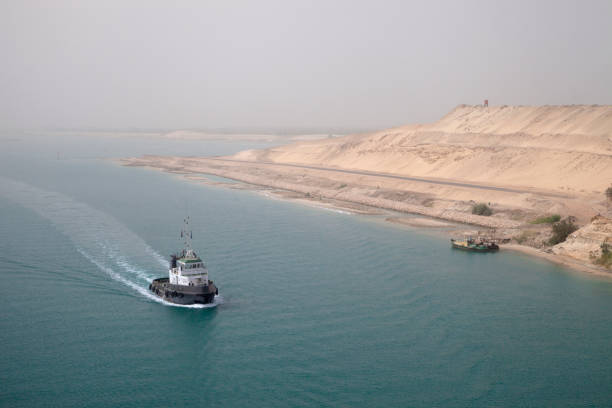
Suez Canal Economic Zone (SCZone)
The Suez Canal Economic Zone (SCZone) is a globally critical industrial, logistical, and commercial hub. Spanning 461 square kilometers across the Mediterranean and Red Sea corridors, it is vital because it converts the maritime traffic passing through the Suez Canal into active manufacturing, transshipment, and investments.
The Suez Canal Economic Zone represents a new chapter in Egypt’s economic development. It was established pursuant to the provisions of Law No. 83 of 2002. The SCZone comprises four main zones:
1. Ain Sokhna Industrial Zone
2. East Port Said Industrial Zone
3. West El Qantara Industrial Zone
4. Technology Zone in East Ismailia
The following Investment and Operational Incentives are applicable to the above mentioned four industrial zones:
1. Customs Duty Exemptions
• All materials and equipment required for the project, whether for construction or operation, are exempt from customs duties when imported from abroad (0% customs duty).
• In the case of re-export, exemptions apply without restrictions.
• For products exported to the domestic market, customs duties are levied only on the foreign components included in the product.
2. Value Added Tax (VAT)
• 0% VAT on all imports into the economic zone, whether from the domestic market or abroad, covering all production and operational requirements (raw materials, components, spare parts, etc.).
• 14% VAT applies to products exported from the economic zone to the domestic market.
3. Income Tax Incentives
• Investment projects are granted a fiscal incentive in the form of a deduction of 50% of the total investment costs from net taxable profits, provided that the incentive does not exceed 80% of the paid-up capital.
• The deduction period is seven years from the date of commencement of the project’s economic activity.
Establishment of Legal Entities within the Suez Canal Economic Zone
Projects established within the Suez Canal Economic Zone (SCZone) shall take only the legal forms as indicated below:
Sole Proprietorship, Single-Person Company, Branches of Foreign Companies, Branches of Local Companies, Limited Partnership, General Partnership, Joint Stock Company, Limited Liability Company, and Partnership Limited by Shares.
The Board of Directors of the Authority shall issue the standard forms of companies’ articles of incorporation. Such articles may not include any provisions that violate public order or the law. The incorporation of companies does not require prior approval of the project or the allocation of land for the establishment of the project.
Basic Requirements for the Incorporation of Capital Companies within the Suez Canal Economic Zone
1. A letter addressed to the Investor Services Department of GAFI requesting the commencement of incorporation procedures.
2. Copies of the powers of attorney issued by all founders, partners, or the company owner, as the case may be, provided that such powers of attorney expressly authorize the incorporation of companies in accordance with the form approved by the General Authority for the Suez Canal Economic Zone.
3. A security clearance inquiry form if there are foreign partners, or where the company owner or manager is a foreign national.
4. A certificate of non-confusion for the company’s trade name, in the case of capital companies.
5. Copies of national ID cards for Egyptian founders, partners, or the company owner, or valid passports for non-Egyptians.
6. A bank certificate for capital companies confirming the deposit of at least 10% of the issued capital in the case of joint stock companies and partnerships limited by shares.
In the case of incorporating a single-person company, a bank certificate confirming the deposit of 100% of the issued capital is required.
7. A copy of the Bar Association membership card of the lawyer who signs the articles of incorporation.
Our law firm navigates complex local regulatory requirements and ensures regulatory compliance to protect investors from future legal liabilities. Starting from advising on the ideal corporate structure (e.g., LLC, sole proprietorship, corporation) to optimize personal liability protection and drafting governing documents to prevent future founder disputes – all these you will find under one roof in our centralised hub allowing our clients to handle all their personal and business legal needs without hassles.
We are expanding – New Office in Saudi Arabia
Sadany&Partners Law Firm has recently established a fully operational office in Saudi Arabia to support both local and international companies with business formation, corporate compliance, and legal consultations.
The recent establishment of the Russian-Saudi Joint Committee and the Russian-Saudi Business Council has contributed to developing relations between the two countries in various fields, diversifying and expanding the base of economic cooperation, and creating a commercial and investment foundation capable of driving trade exchange forward. On the sidelines of the Russian-Saudi Investment and Business Forum in Riyadh on December 1, 2025, Saudi Arabia and Russia signed an agreement granting mutual visa-free entry for citizens of both countries. Under the new arrangement, passport-holding citizens of both countries will be allowed visa-free entry for tourism, business or family visits.
Saudi Arabia also offers diverse company types for incorporation with the Limited Liability Company (LLC) and Joint Stock Company (JSC) being most common, alongside Sole Proprietorships, Partnerships (General & Limited), Simplified Joint Stock Companies (SJSC), and Professional Companies, allowing for 100% foreign ownership in many sectors under Vision 2030, catering to small businesses to large enterprises with varying liability and capital needs.
Sadany&Partners Law Firm, with more than 10 years of experience in corporate, investment, and commercial law, provides comprehensive legal support for foreign businesses looking to establish or expand in Egypt and beyond. In addition, our law firm, with its office in Riyad, Saudi Arabia, assists investors at every stage from market entry strategy and due diligence to company formation, contract negotiation, regulatory compliance, dispute resolution, and ongoing legal advisory services.
Mohammed Ashraf-Junior Ass. Mohab Moataz-Associate Moustafa Essam-Counsel Ahmed Drwish-Partner
"Building Bridges Across Asia, Russia and the Middle East: The Role of AECCI"
Mr. Zaheer J. Buhkari
Hon. Chairman- AECCI
As global economic dynamics continue to evolve, Asia and Russia are increasingly exploring new avenues of cooperation in trade, investment, technology, culture and people-to-people engagement. In this context, business chambers and trade promotion organizations play an important role in creating meaningful connections between enterprises, institutions, and professionals across borders.
The Asian Exporters’ Chamber of Commerce and Industry (AECCI), India, has been actively working to strengthen international business cooperation by providing a platform for trade facilitation, networking, capacity building and global partnerships. Through its extensive international collaborations spanning more than 50 countries, AECCI supports exporters, entrepreneurs, professionals and investors seeking opportunities in emerging and established markets worldwide.
AECCI’s initiatives include Virtual B2B Forums, expert consultations, international business matchmaking, trade advisory services and sector-focused support.
A notable example of AECCI's commitment to develop international cooperation is its partnership with Sadany &Partners Law Firm, Egypt. This collaboration was established to provide specialized support to exporters, importers, investors and businesses operating across India, Egypt, and the wider region. Through joint webinars, trade consultations and legal advisory initiatives, both organizations are working to address cross-border trade challenges, investment opportunities, commercial regulations and dispute resolution mechanisms. The partnership reflects a shared vision of promoting sustainable trade, strengthening business confidence, and creating new opportunities for economic cooperation.
The relationship between Asia and Russia holds significant strategic importance in the contemporary global economy. Russia remains an important partner for many Asian nations in areas such as energy, infrastructure, technology, manufacturing, education and logistics. At the same time, Asian economies continue to offer vast opportunities for trade expansion, innovation, investment and industrial collaboration. Growing connectivity initiatives and multilateral platforms have further enhanced opportunities for constructive engagement across the Eurasian region.
India and Russia, in particular, share a longstanding and trusted partnership that has expanded beyond traditional sectors to include business cooperation, entrepreneurship, digital innovation, education and cultural exchanges. The strengthening of commercial ties and increasing engagement between business communities create opportunities not only for bilateral growth but also for broader regional cooperation across Asia.
As an organization committed to promote international trade and economic cooperation, AECCI welcomes opportunities to engage with institutions, chambers, embassies, and businesses from Russia and across Asia. Through dialogue, collaboration, and shared development goals, we believe that stronger Asia-Russia partnerships can contribute significantly to sustainable economic growth, innovation, and prosperity for future generations.
On the occasion of Russia Day, AECCI extends its warm greetings to the people of the Russian Federation and reaffirms its commitment to promoting international friendship, business cooperation and mutually beneficial partnerships between Russia, India and the wider Asian region.
AECCI-Editorial Team
Asian Exporters` Chamber of Commerce&Industry
Mob/Whatsapp 0091-8433720996
Email: info@aecci.org.in
www.aecci.org.in
RELATED POSTS

- /
- 2026-06-25